
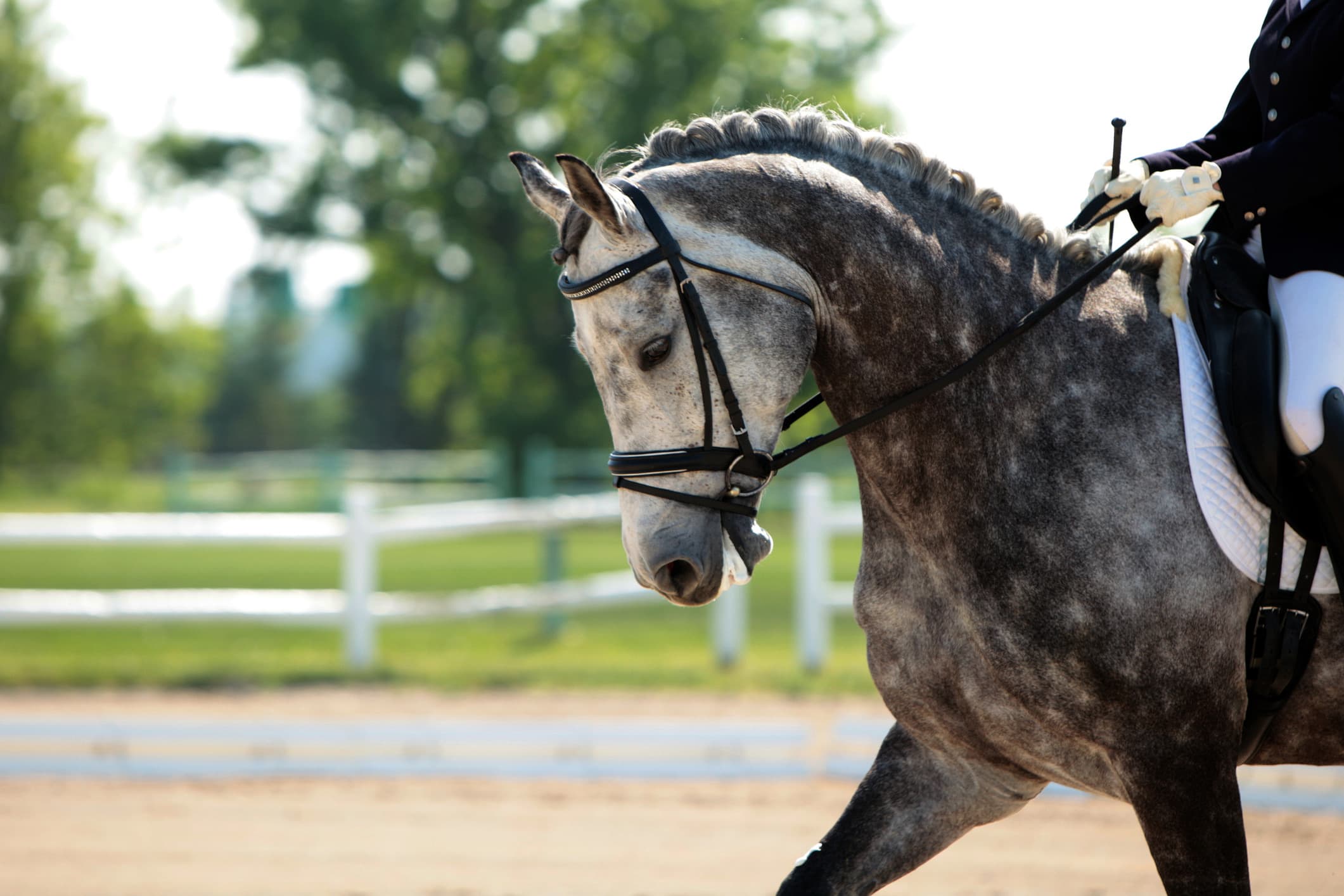
Buying a dressage horse is one of the most important decisions in a rider's life. It is not just a financial investment — it is the beginning of a long-term partnership in which trust, harmony, and shared development make all the difference.
But how do you recognize a truly outstanding dressage horse? Which qualities are essential — and how do you find a horse that matches your riding style and sporting ambitions in the long term?
This guide provides a well-founded overview of the most important factors when buying a dressage horse — from movement quality and character to bloodlines, market structures, and a professional selection strategy.
What to Look for in a Dressage Horse
A top-level dressage horse combines conformation, movement quality, rideability, and mental stability. A horse that willingly and attentively engages with its rider will bring motivation and success over many years — far beyond basic gaits.
Experience shows that it is not the most spectacular movement that determines success, but harmony, willingness to learn, and the ability to perform consistently under pressure.
Movement Quality and Mechanics of Gaits
The basic gaits are the foundation of a dressage horse:
- Walk: clear four-beat rhythm, ground cover, relaxed stepping
- Trot: elastic, expressive, naturally balanced
- Canter: balanced, uphill tendency, easy to collect
Shoulder freedom and engagement of the hindquarters are essential — they create expression, carrying power, and enable advanced movements. Horses that already show stability at a young age often develop the greatest athletic potential later on.
Character and Rideability
Rideability is the key to long-term success. A cooperative, willing horse responds sensitively to aids, remains mentally stable, and stays motivated. For ambitious riders, this is often more valuable than spectacular movement paired with a difficult temperament.
Many trainers agree: horses with average movement but exceptional rideability often become true competition horses because they naturally adapt to the rider and remain willing to learn.
Conformation and Build
Harmony, a correctly set neck, a strong hindquarters, and a solid foundation are essential for longevity and collection ability. Details such as shoulder angle, back length, and wither shape significantly influence future performance.
Horses in the mid-size range (approx. 165–175 cm) often provide the ideal balance of elegance, strength, and agility — the foundation for upper-level dressage.
Selection and Evaluation
Choosing the right dressage horse requires experience, sensitivity, and a trained eye. Movement quality, rideability, conformation, and mental stability are best assessed with professional guidance from trainers, consultants, or experienced riders.
Recognizing development potential early allows young horses to be nurtured effectively and developed into future top-level horses.
Top Horses Are Rarely an Accident
Behind every successful dressage horse are years of careful breeding, professional upbringing, and systematic training. Serious breeders invest time and expertise, while experienced trainers gradually prepare horses for the demands of the sport.
Famous bloodlines — from German stallions such as Sandro Hit, Don Schufro, Rubinstein I, and Florestan I to Dutch sires like Jazz, Vivaldi, or Van Gogh — clearly demonstrate how structured breeding and targeted training can develop world-class sport horses.
The International Dressage Horse Market
High-quality dressage horses are traded internationally, often before they even appear in competition. Buyers from Europe, North America, the Middle East, and Asia compete for the best talents.
For discerning buyers, market knowledge, experience, and access to networks are crucial. Professional advisors provide a clear advantage by knowing breeders, training stables, and the long-term development pathways of young horses.
Detailed Checklist for Discerning Buyers
- Define the horse profile
- Set target level, required movements, and long-term sport goals
- Consider rider profile: experience, size, weight, training style
- Evaluate movement and rideability
- Check basic gaits, shoulder freedom, and hindquarter activity
- Observe willingness to learn and responsiveness to aids
- Assess mental stability: calmness, focus, resilience
- Check conformation and structure
- Legs, joints, hooves, back, neck set, and musculature
- Harmony and carrying ability for future collection
- Analyze origin and bloodlines
- Breeding program, proven stallions, and sport offspring
- Prefer reputable breeders and training facilities
- Health and development stage
- Veterinary examination (pre-purchase exam)
- Check development status and soundness
- Use professional guidance
- Involve trainer or advisor
- Use experience and market knowledge for objective decisions
- Consider long-term perspective
- Suitability for higher levels, training approach, and competition planning
- Plan for care, development, and long-term progression
Conclusion: Finding Your Ideal Dressage Horse
Buying a dressage horse requires patience, experience, and clear goals. Beyond movement quality, conformation, and pedigree, rideability, character, and long-term development are decisive. Those who choose carefully and follow a professional selection process lay the foundation for a successful partnership in dressage sport.
At JSF International, I support you throughout the entire buying process — from the first consultation to targeted search and purchase handling. Contact me for a non-binding initial consultation.